
1.What the Chart Shows
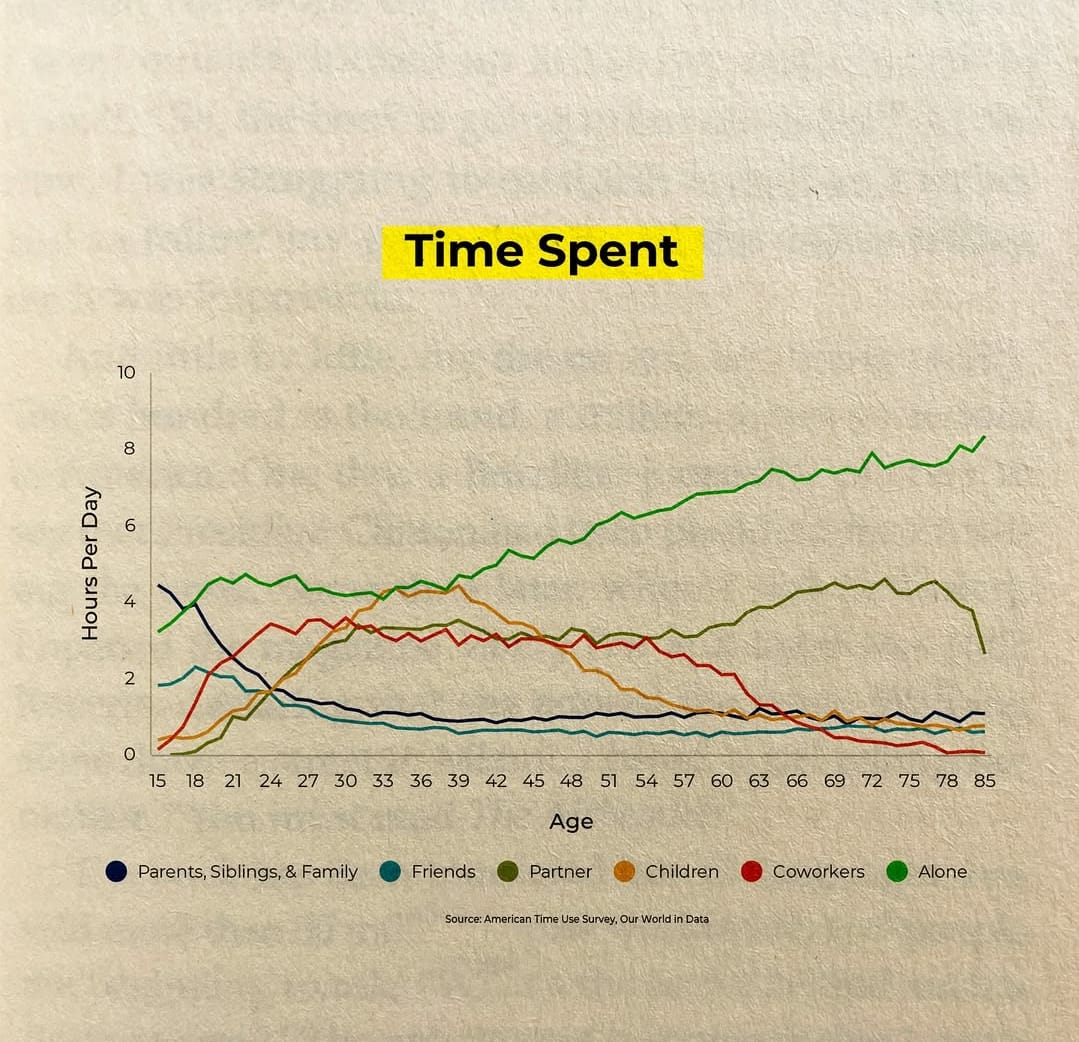
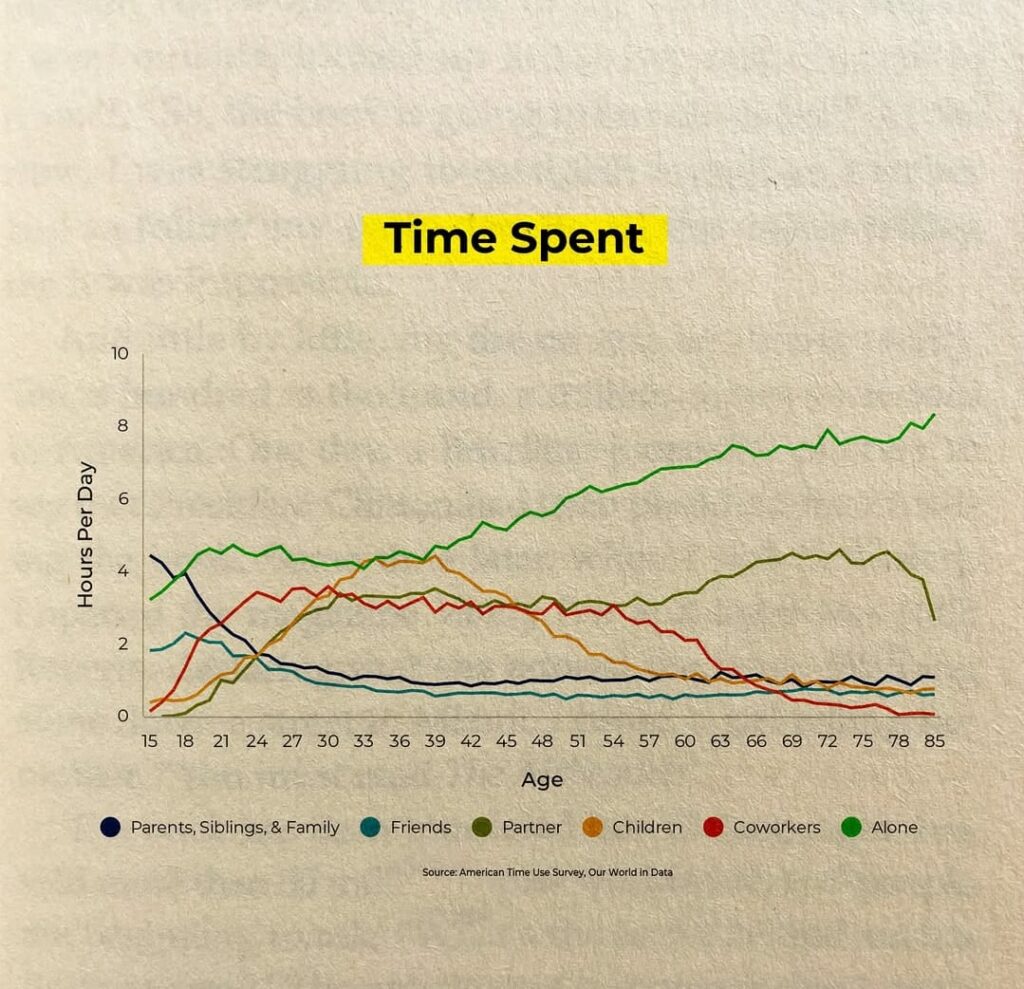
The image is a line graph titled “Time Spent,” with age on the bottom and “hours per day” on the side. Each coloured line shows how much time a person spends with different groups: parents and family, friends, partner, children, coworkers, and alone. As age increases from 15 to 85, the shape of each line changes, telling the story of how our relationships shift across life.
2. Family and Friends in Early Life
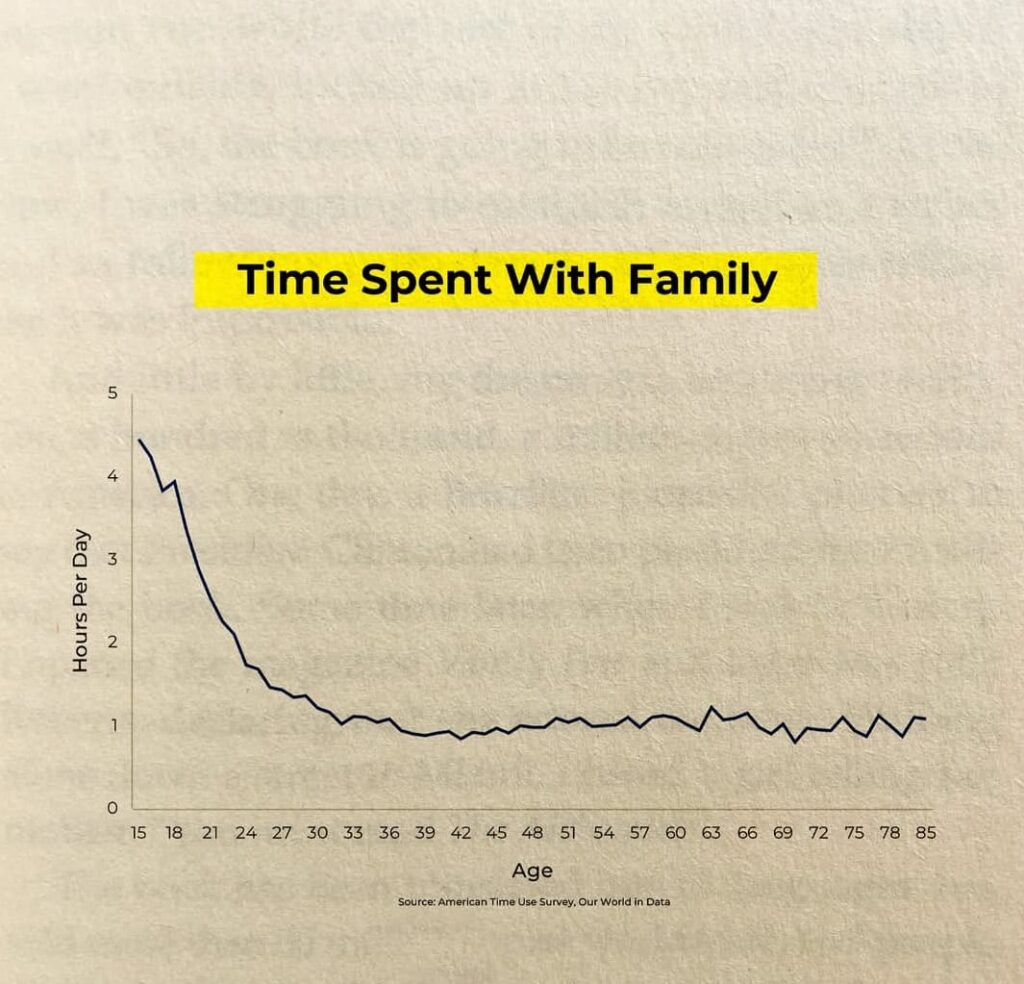
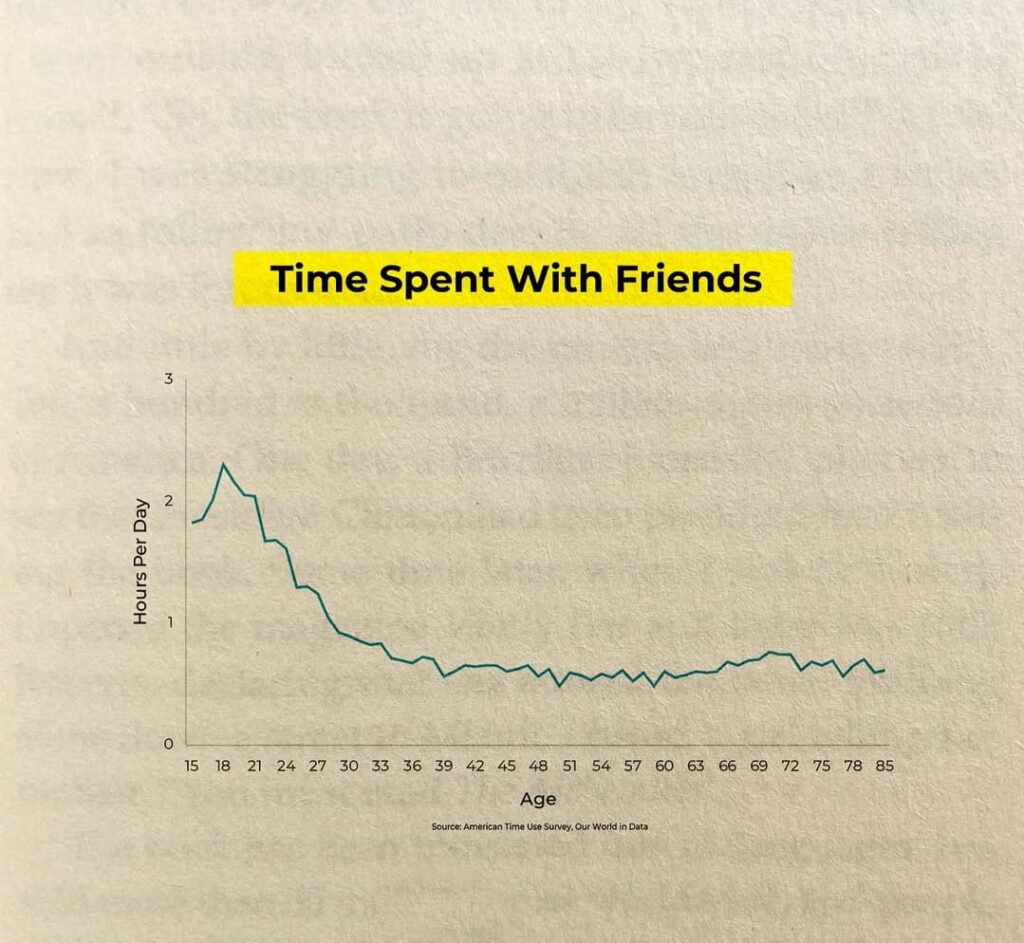
In the teenage years, the dark line for parents and siblings starts high and then drops quickly. This represents how school, college and independence slowly reduce the hours we spend at home. At the same time, the line for friends rises, showing that evenings, weekends and free time are increasingly spent with classmates and college groups instead of family.
3. Partner, Work and Children in Mid‑Life
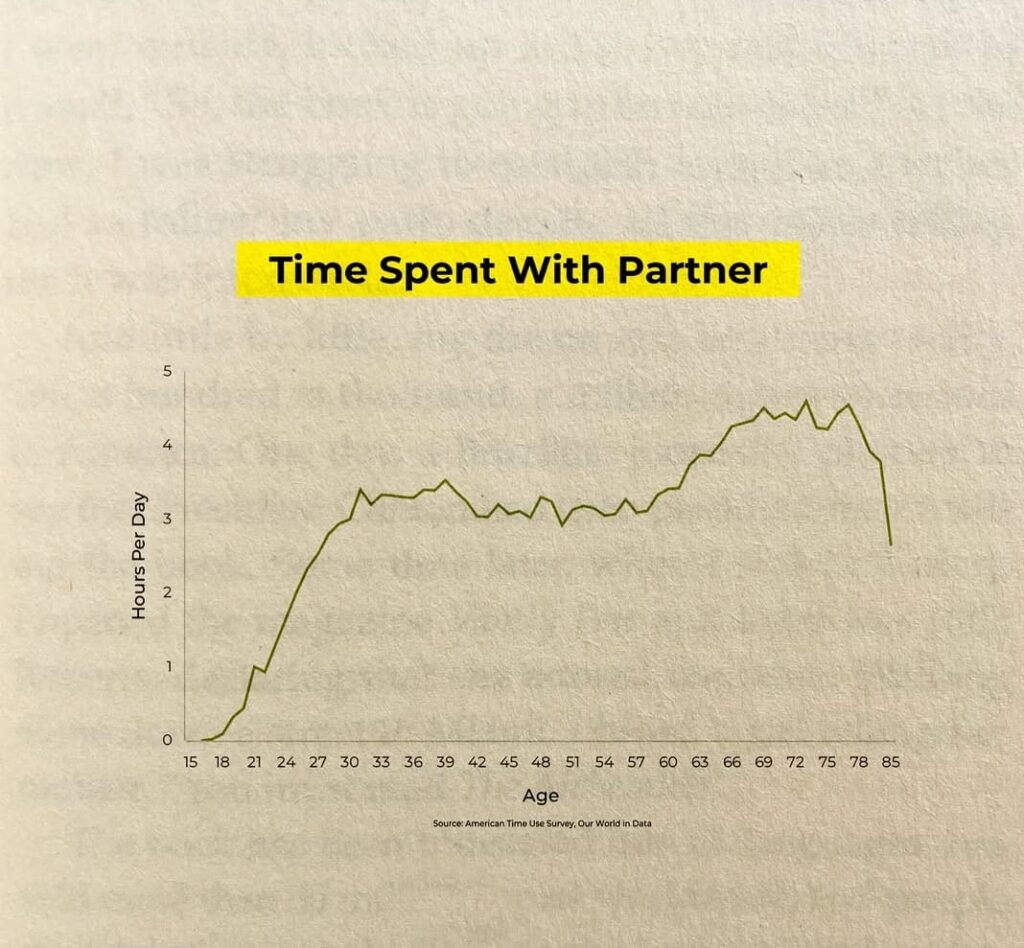
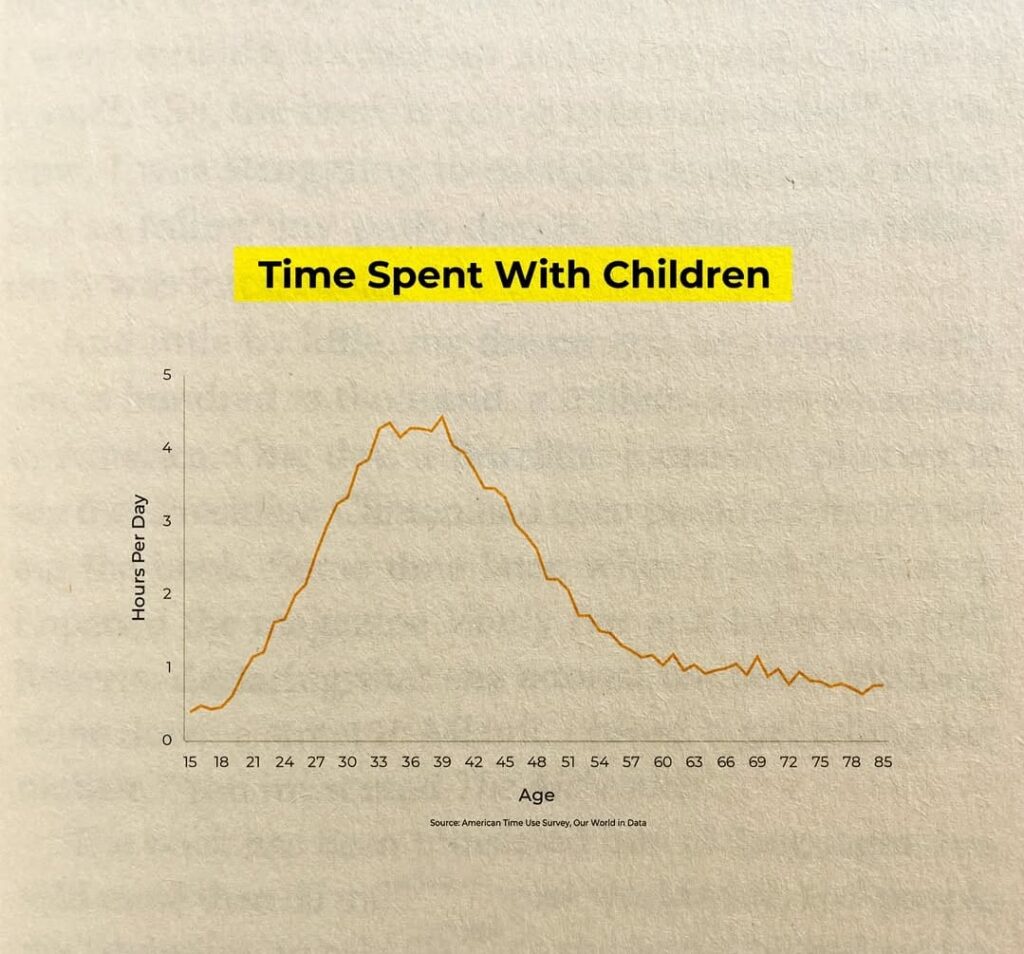
As people move into their 20s and 30s, the line for partner climbs and becomes one of the largest parts of the graph, meaning a big share of the day is spent with a life partner. The coworkers line grows during working age, reflecting office hours and professional life. Later, the children line rises sharply, showing that parenting years demand many hours every day before slowly declining when children become adults.
4. Growing Time Alone
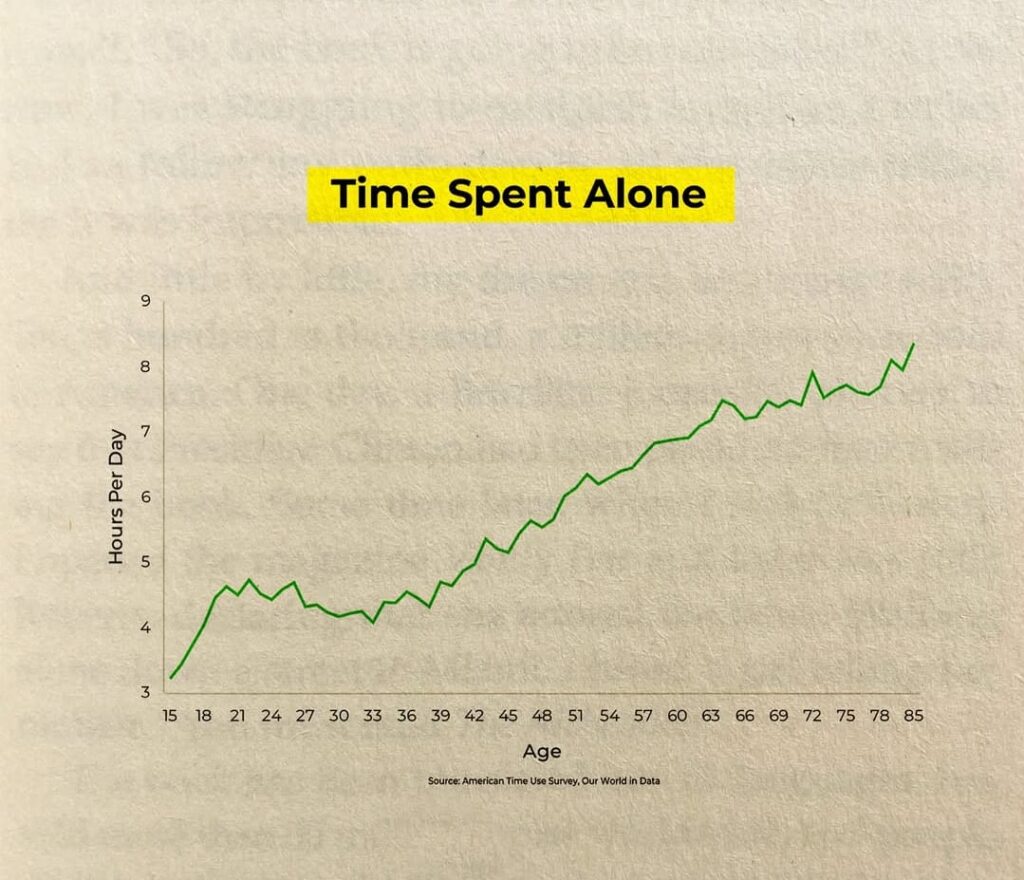
The most surprising line is the one for “Alone,” which starts low in youth but slowly climbs higher with age. In older years this line becomes the highest, indicating many hours are spent by oneself after retirement, when children move out and social circles become smaller. This can be peaceful if relationships are strong and health is good, but it can also mean loneliness if connections were not nurtured earlier.
5. The Message Behind the Numbers
Overall, the image is more than just data; it is a reminder that time is the real currency of life. The chart suggests we should consciously invest our hours in relationships that matter—family, real friends, a supportive partner, meaningful work and even healthy time alone. If we understand how these lines usually move, we can make better choices today so that every life stage feels rich, connected and intentional.